
Movies
When History Gets Dark: Leslie Odom Jr. to Bring Sammy Davis Jr.’s Haunting Past with Church of Satan to the Big Screen
Dec
1. A Risky Revival: From Rolling Stone Article to Horror Film
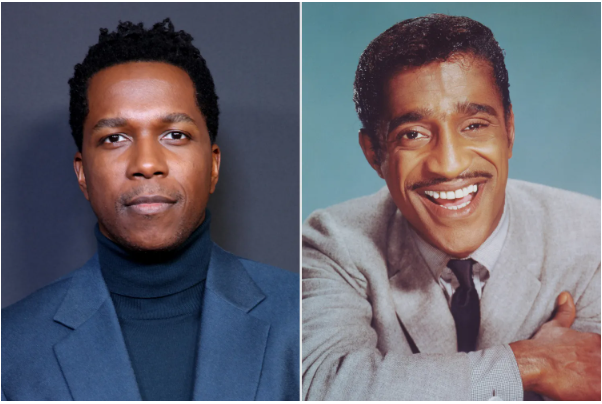
A startling story long buried in tabloid whispers is being resurrected for all to see: Leslie Odom Jr., best known for his electrifying turn in Hamilton, is set to both write and star in a new horror film based on the 2024 article “Dance With the Devil.” Originally published by Rolling Stone and penned by journalist Alex Bhattacharji, the piece explores an unlikely — and controversial — connection between Sammy Davis Jr. and Church of Satan founder Anton LaVey.
Those rights have now been acquired by Odom, who beat out several contenders after a bidding war, to adapt the explosive historical narrative into a feature film in partnership with Rolling Stone Films. The movie’s working logline — “How a TV pilot called Poor Devil begat a friendship between the performer, Sammy Davis Jr., and Anton Szandor LaVey” — promises a chilling dive into the tensions between fame, identity, and forbidden alliances.
For Odom, this represents a major pivot. Already an acclaimed actor across Broadway, film, and television, he’s now stepping behind the camera (or at least behind the page) for his feature-film writing debut. The move signals not just a creative risk, but a willingness to re-examine — through horror and history — one of the darker, more complex corners of American entertainment history.
2. Rewriting a Hidden History: What the Film Could Reveal
The original Rolling Stone article claims that in the early 1970s, Davis — at the time one of America’s most beloved entertainers — flirted with the occult. According to the piece, Davis was drawn to a TV pilot titled Poor Devil, a supernatural-themed show that envisioned him as a demon. The show never aired; the pilot was shelved.
Yet that aborted project appears to have triggered something far more unexpected: a relationship between Davis and LaVey, the charismatic founder of Church of Satan. The horror film adaptation aims to trace that connection — Detroit-born performer meets occult provocateur — and dramatize Davis’s quest for acceptance amid a world rife with racism, shifting sexual mores, and cultural revolution.
Producers and writers emphasize that this isn’t sensationalism for its own sake. According to Bhattacharji, the story is “profoundly alienated Davis’s search for acceptance,” a narrative that touches on race, sexual identity, religion, and the counterculture movement of the late 20th century.
If done with care, the film could serve as more than horror entertainment — it could be a haunting portrait of a man struggling with identity, fame, and belonging, all while society watched. It would give audiences a chance to question how much we truly know about public figures, and how much we’re willing to believe.
3. Why Leslie Odom Jr. Is the Right (– or Risky) Man for the Job
Leslie Odom Jr. isn’t just any actor. With a career spanning Broadway, film, voice acting, songwriting, and publishing, he’s one of the most versatile performers working today. His portrayal of Aaron Burr in Hamilton earned him both a Tony and a Grammy — but he’s hardly stuck in one role. Over the years, he’s proven adept at dramatic, comedic, musical, and even horror genres (as in his more recent film efforts).
That versatility sets the stage for something bold. Tackling Sammy Davis Jr. — a figure whose life was rarefied, complex, and often contradictory — requires more than acting chops. It demands empathy, nuance, and an understanding of the weight that fame and identity can carry. Odom brings all those qualities to the table.
Moreover, taking on this film as his writing debut suggests a personal commitment: this isn’t a throwaway project or a simple cash grab. For Odom, there’s clear artistic ambition. He’s not just telling a story — he’s revisiting a painful cultural memory and inviting viewers to question what legacy and identity truly mean.
Yet that ambition comes with risk. Exploring Satanism, race, and celebrity in one film — particularly involving a real, beloved public figure — opens the door to controversy. Missteps could easily come across as sensationalist or disrespectful. But Odom seems aware of that, framing the film as a sensitive exploration of alienation and identity.
4. What the Revival Means in 2025: Culture, Horror, and the Unsanitized Past
In an era where Hollywood increasingly revisits and re-interprets real lives — often to acclaim or outrage — this film could be particularly timely. The story of Sammy Davis Jr. and his alleged connection with the Church of Satan forces questions about how public personas were curated, sanitized, and sometimes rewritten.
Racial power dynamics, sexual identity, and cultural belonging — all themes that were fraught in the 1970s — remain deeply relevant today. By bringing this story to screen, filmmakers aren’t just retelling history, but forcing a conversation about what we celebrate, what we hide, and who gets to decide.
Moreover, horror as a genre often functions as a mirror to societal fears. In this case, the film could reflect fears of alienation, acceptance, and the cost of fame. The occult — literal or metaphorical — may stand in for the isolation many people with marginalized identities know all too well.
If the film succeeds artistically, it might encourage a wave of re-examinations: not just of Hollywood legends, but of how history sanitizes — and sometimes erases — uncomfortable truths. For viewers and critics, it could be a powerful reminder: sometimes our heroes’ stories are messier than we’re ready to accept.
A Cautionary Tale: What to Watch (and What Could Go Wrong)
With such heavy themes and real historical figures involved, there are pitfalls. First, the film must balance horror stylings with respect; pushing too far into sensationalism risks trivializing the life of a complex artist. Second, there’s the danger of reinforcing conspiracy or rumor as fact — given the controversial nature of the supposed ties to the Church of Satan. Without careful framing and context, it might be reduced to tabloid-style exploitation rather than thoughtful commentary.
Then there’s the challenge of representation: recreating a world of the 1960s–70s for a modern audience requires sensitivity, authenticity, and awareness of the racial and cultural dynamics that defined, and often constrained, Black entertainers. Failing to ground the narrative in that context risks erasing a vital part of history.
Finally, the legacy-risk: for Odom, this film could redefine part of his career — for better or worse. If handled poorly, critics might question the actor’s judgment, or accuse him of profiting off scandal. If handled well, however, it could position him as a serious artist unafraid to challenge norms and shine light on uncomfortable truths.
5. Conclusion: Why This Film — And Its Courage — Matters
The journey from a provocative magazine article to a full-length feature film is rarely smooth — especially when that article claims to unearth taboo alliances, forgotten scandals, and cultural dissonance. But that’s exactly what Leslie Odom Jr. is attempting with this adaptation. By committing to the story, acquiring the rights, and taking on the mantle of writer and star, he’s betting on the value of memory — not glamour.
If the film comes to fruition, it could become one of the most provocative cinematic events of the year. More than that, it might force us to re-evaluate how we remember icons like Sammy Davis Jr. — not as flawless legends, but as humans navigating complicated lives amid shifting social mores.
For audiences, it offers a rare chance: to step beyond nostalgia, beyond myth, and into a narrative that confronts darkness, faith, fame, and identity — all under the watchful gaze of history. It’s a gamble. But sometimes, those are the kinds that lead to the most unforgettable stories.
From: Doublejoydesigns

