
Movies
The ER Episode That Turned George Clooney into Batman: How One Night on TV Changed Hollywood Forever
Nov
1. A Career-Defining Rescue
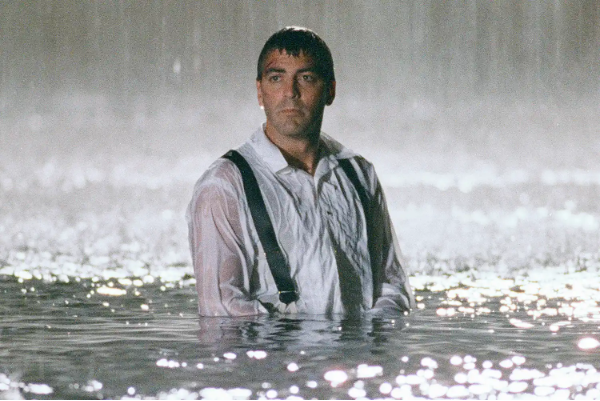
In 1995, George Clooney was already a familiar face to television audiences thanks to his breakout role as Dr. Doug Ross on ER. But it was one unforgettable episode—“Hell and High Water”—that catapulted him from TV heartthrob to big-screen leading man. In that gripping episode, Clooney’s character embarks on a desperate rescue mission to save a young boy trapped in a flooded storm drain during a torrential downpour. The scene was so powerful, so emotionally charged, that it became a turning point in both ER history and Clooney’s career.
The episode drew an astounding 45 million viewers—an almost unimaginable number by today’s standards. The combination of raw emotion, intense heroism, and Clooney’s natural charm turned him into the epitome of the classic American hero. Audiences saw not just a doctor on a medical drama, but a man willing to risk everything to save a life.
Behind the scenes, executives at Warner Bros. were watching too. The very next day, after witnessing Clooney’s commanding performance, they approached him with an offer that would forever change his professional path: the role of Batman. Overnight, Clooney’s destiny shifted from hospital halls to the Batcave.
That moment was more than just good timing—it was lightning in a bottle. A single TV episode became the launchpad for one of the most high-profile casting decisions of the 1990s.
2. From Doctor to Dark Knight: The Leap to Batman
Landing the role of Batman was no small feat. Clooney had long been considered a talented actor, but ER had only recently transformed him into a household name. The timing was perfect. Warner Bros., looking for a new face to embody Bruce Wayne after Val Kilmer stepped down, saw in Clooney a mix of sophistication, strength, and humanity—traits they believed could refresh the franchise.
Director Joel Schumacher, who helmed Batman & Robin (1997), wanted a leading man who could balance the duality of the character: the suave billionaire playboy and the haunted vigilante. Clooney’s ER performance checked every box. In “Hell and High Water,” he had proven that he could play heroism not as arrogance, but as empathy in action—a man guided by both heart and conviction.
For Clooney, the leap from television to blockbuster cinema was monumental. Few actors had made such a transition so quickly, and fewer still had done it in such dramatic fashion. With the announcement that he would wear the cape and cowl, Clooney’s star power exploded.
The media frenzy was immediate. Magazines hailed him as “Hollywood’s next great leading man.” Fans were ecstatic to see their favorite TV doctor ascend to superhero status. Clooney, always grounded, took it in stride. He once remarked with his characteristic humor that he was “just lucky the right people were watching that night.”
What no one could predict, however, was how that luck would test him in ways he couldn’t have anticipated.
3. Why “Hell and High Water” Was So Important
The ER episode that launched Clooney’s movie career remains one of the most iconic hours of television ever aired. Beyond the sheer spectacle of the rescue, it was a perfect storm of storytelling, performance, and timing.
At its core, “Hell and High Water” wasn’t about heroics for show—it was about moral courage. Dr. Doug Ross’s relentless determination to save a child mirrored the qualities that audiences and filmmakers alike associate with Batman: selflessness, bravery, and a quiet inner strength. Clooney brought authenticity to both roles by grounding his heroism in humanity rather than bravado.
The episode’s scale was also cinematic. With its high production values, heart-pounding pacing, and emotional depth, it looked and felt more like a feature film than a TV show. That cinematic energy helped convince studio executives that Clooney could carry a major motion picture.
Another key factor was visibility. ER was produced by Warner Bros. Television—the same parent company behind the Batman films. The corporate proximity made it easy for decision-makers to see the potential crossover. When executives watched “Hell and High Water,” they didn’t just see a hit episode—they saw their next Bruce Wayne.
Timing also played a crucial role. The mid-1990s marked a period when Hollywood was increasingly turning to television stars for blockbuster roles. Clooney’s charisma and work ethic made him an ideal candidate for such a leap. He represented a new kind of leading man: relatable, empathetic, and distinctly modern.
4. The Fallout: Triumph, Regret, and Reinvention
When Batman & Robin premiered in 1997, expectations were sky-high. Clooney had inherited one of the most iconic roles in cinematic history, following Michael Keaton and Val Kilmer. But despite its big budget, star-studded cast, and massive marketing campaign, the film was met with disappointment from critics and fans alike.
The colorful costumes, over-the-top villains, and infamous “bat-nipples” became instant punchlines. Clooney’s portrayal, though charming, couldn’t overcome the film’s tonal inconsistencies. In later years, Clooney would candidly admit that the movie was “a disaster,” even joking that he “killed the franchise.”
Yet even amidst the backlash, Clooney emerged relatively unscathed. His professionalism, humility, and humor about the experience endeared him to fans and industry insiders. Rather than being defined by Batman & Robin’s failure, he used it as a learning experience—a reminder of the kind of projects he truly wanted to pursue.
In the years that followed, Clooney reinvented himself as one of Hollywood’s most respected actors and directors. Roles in Out of Sight, Three Kings, Ocean’s Eleven, and Michael Clayton showcased his range and depth. His career evolution proved that one misstep—even a high-profile one—doesn’t define a legacy.
In hindsight, “Hell and High Water” remains the catalyst that gave Clooney his big break. While the Batman experiment was rocky, it pushed him toward creative control and artistic growth. Without it, he might never have become the filmmaker and humanitarian the world admires today.
5. Legacy: How One Episode Changed Hollywood
George Clooney’s journey from ER to Batman reveals much about Hollywood’s unpredictable nature. It underscores how a single performance—sometimes a single moment—can reshape an actor’s destiny.
For Clooney, that storm-soaked episode was more than just great television. It was a showcase of everything that made him special: charisma, compassion, and courage. Those qualities, visible to millions that night, became his ticket to global superstardom.
The story also highlights television’s power as a launching pad. In the 1990s, the gap between TV and film stardom was still wide. Clooney’s leap helped close it, paving the way for future stars like Bryan Cranston, Jennifer Aniston, and Elisabeth Moss to transition seamlessly between mediums.
But perhaps the greatest takeaway is what Clooney himself learned from the experience. He often reflects on his Batman years with humor and humility, acknowledging the lessons they taught him about creative choices and career resilience. That perspective—the ability to own both success and failure—has defined him far more than any cape or cowl ever could.
Today, when audiences revisit “Hell and High Water,” they see more than a thrilling ER episode. They see the birth of a modern movie icon. It’s proof that sometimes, destiny arrives not with a script or a contract—but with a flood, a rescue, and a doctor who wouldn’t give up.
From: Doublejoydesigns

